Sunday, February 28, 2010

WP1: Rough Draft 1

Wars propose a complicated situation for every country involved because the whole dynamic of the economy must change not to mention the emotional tribulations. The United States experienced these challenges during World War II. Although initially not trying to get involved in the conflict, the US retaliated after the Pearl Harbor attack on December 7, 1941. Sacrifices, both voluntary and involuntary, were made by citizens of the US to help the country prevail in battle. During 1943 the US government issued shoe rationing (three pairs of leather shoes per year), meat rationing (28oz per week), and standstill wages and prices to streamline the economy (A WW2 Timeline). With all the country’s resources all going to the war and people dying, the future looked bleak. However, there was a part of the US lifestyle that was thriving.


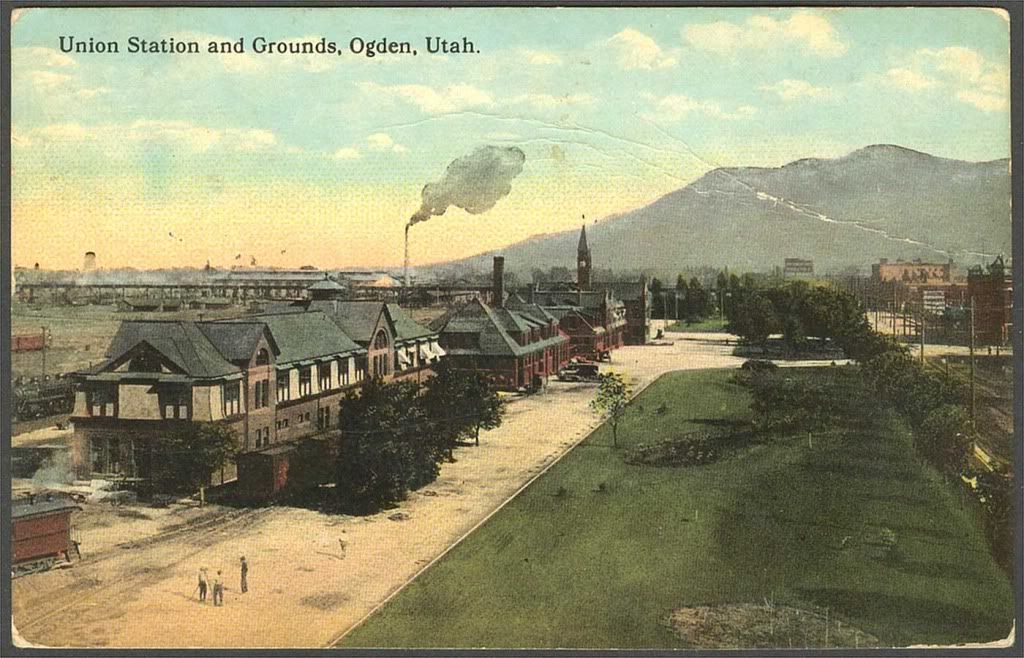
Job availability increased dramatically with the start of the war. With all the soldiers fighting overseas, new workers were needed to replace them. Also, new jobs were created such as weapon manufacturing, making cloths for soldiers, and transporting goods for the war. One of the businesses that profited greatly from World War II was the railroads. One such station, Ogden Union Station, played a major role in transporting military goods along with the usual passengers and cargo. Special “troop trains” would ferry around the soldiers from town to town. One interesting insight that an observer at this sight had was that the soldiers didn’t care where they were or where they were going. They were just happy to be traveling around the country. At one point during the war, a train rolled through the station every five minutes (How Trains Helped Win a War).


The photograph, Santa Fe R.R. freight train about to leave for the West Coast from Corwith yard, Chicago, Ill, is a prime example of the railroad business during this time period. It was taken by Jack Delano, an American documentary photographer, in 1943 as part of the Farm Security Administration-Office of War Information Collection. The goal of this collection of photographs was to capture American life during the heart of World War II. This specific photograph exemplifies the argument that blue-collar laborers during World War II were dealing with contrasting feelings: the somber sadness of the tragedy of war and the uplifting spirit of the economy due to increased job availability and productivity. This is evidenced through technical elements such as coloration, vectors of attention, and framing.

Contrasting hues play a major role in contributing to the argument in this photograph. The eye is first drawn to the black locomotive because it contrasts so drastically with the white surroundings. These two hues are exact opposites, forcing juxtaposition into the photograph. Also, the lightly saturated blue hues in the sky help make the steam from the locomotive stand out and not be immersed in the sky line. The front of the locomotive is highly saturated because it is facing away from the sun. This high saturation continues in the shadow the locomotive casts on the car on the adjacent track. This creates an overall darker feel in the right portion of the photograph, while the left (especially the upper left) is bright and has a more open feel to it. Such contrasting elements help portray the photograph’s argument that there was a clash of views during World War II.


Vectors of attention are very prominent in this photograph and help to further the argument. There are seven men in this photo and each has a unique vector of attention that helps the audience to glean information concerning their intentions. The men are positioned sporadically and facing different directions.

From the title we know that this train is about to the leave the station. Logically, we believe these men were loading the train and preparing it for departure. Three of these men’s vectors of attention are directed toward the right bottom corner of the photo (the tracks leading to the next destination). This presents an ethos of expectation or accomplishment since they have finished their job. The man furthest from the camera has a vector of attention aimed at the group of men gathered around the locomotive, especially the man on the far left. Concerning ethos, he seems distant and lagging creating pathos of loneliness and isolation. The man on the far left is staring at the locomotive with his whole body pointed toward it. It seems he has a connection with the locomotive, evoking feelings of losing a beloved friend.

Finally, the last and most intriguing man is addressing his attention to the window of the locomotive where the conductor’s torso is visible! From this observation one can infer that these two men have a deeper connection than the others do. The worker may be wishing the conductor a safe journey, requesting that he delivers a package to a relative, or warning the conductor about a possible malfunction or aversive weather.


Through these vectors of attention one realizes that all these men have a bond with this train and what it represents. The train is not only a source of income, but hope for the soldiers fighting the war. There is a clash of feelings between hopefulness regarding the train’s journey to its destination and the nostalgia of all the good fortunes the train has provided these workers.

The framing elements in this photo really accent the dependence of these men of the success of the train’s journey. The photo is taken at an angle to show both the longevity of the train and also a short stretch of track that represents the train’s future journey. It gives a sort of “before and after” snapshot of the journey. Although this is a military train that carries mostly cargo, one would expect at least a few passengers to be present. However, none can be found which leads the viewer to wonder if there are any waiting at the train station which is not visible. The fact that no passengers, train station, or other locomotives are present creates pathos of isolation. The reason for this is to put an emphasis on the importance of this one train and how its fate has repercussions throughout the country.

Santa Fe R.R. freight train about to leave for the West Coast from Corwith yard, Chicago, Ill uses coloration via contrasting hues, varying vectors of attention, and isolating framing to signify juxtaposition between somberness and hopefulness in Americans during World War II. War creates an uncertain future for a country and therefore the citizens of that country have a cornucopia of feelings that swarm them daily regarding their actions and their significance. Blue-collar workers during this time period felt saddened by the war and wanted to contribute in any way possible while still being able to support their family. A booming wartime business such as the railroad company exemplifies this phenomenon perfectly.

Works Cited

"A WW2 Timeline." World War 2 Timelines 1939-1945. 2006. www.worldwar-2.net, Web. 17 Feb 2010.

"How Trains Helped Win a War." Utah History to Go. 2010. utah.gov, Web. 18 Feb 2010.

Saturday, February 20, 2010

WP1: Statement of Purpose

World War II was a hectic time not only in this country, but around the world. People received information through propaganda and newspapers, which often had some bias to help persuade citizens toward a certain viewpoint. Photography was also present during this war, a trait viewed as unbiased and truthful. However, considering coloration, vectors of attention, audience, and context it is clear that photographs relay some form of argument.

My purpose for this writing assignment is to identify the prominent argument in Santa Fe R.R. freight train about to leave for the West Coast from Corwith yard, Chicago, Ill. Secondary arguments, primary and secondary audiences, and overall context will factor into my rhetorical analysis of this photograph. This is a worthy purpose because it will help reveal the photographer’s real reason for taking this photograph and altering in the way that he did. This is a worthy goal in the eyes of many audience members.

For any form of media (especially something that is online) there will be multiple audiences from a variety of backgrounds. My primary audience will be my teacher and my classmates since they will have easy access to my blog post and know that it’s there. There is no doubt that my teacher will read it and there is a high probability that at least one of my peers will stumble on my post out of curiosity. Secondary audiences include anyone who has access to the internet and happens to find my post, history buffs that are looking for information on the United States during World War II, and railroad enthusiasts such as former workers who want to acquire a photograph of a prominent locomotive during the early 1940s. When writing my rhetorical analysis I need to make sure that my writing appeals to both audiences and can be understood clearly and concisely.

With multiple audiences, I need to write in a straitlaced manner and have evidence to back up any major claims. Increasing the amount of viable primary sources I have will in turn increase the validity of my argument. I know full well that my argument will not be considered the “correct” argument by every member of my audience. My aim is only to submit a possible argument backed up with enough evidence to convince the audience that this could be an alternative argument made by the author.

Context plays a great role in the way information is presented and received. Since my blog post will be on the internet and visible by anyone in a country with internet access, I need to limit any false stereotypes or generalizations. Broadening my scope will be essential to this writing project due to the fact that it will be posted on a global scale and therefore needs to reflect that same scale. I can also look at context through a temporal lens and compare how the argument has changed over time. Is the argument specific to that time period or does it still resonate today? It’s possible that the argument only applies to wars and therefore could be used with the Iraq war.

Taking all these measures into account I feel the purpose of my photograph is to present the contrasting emotions of the citizens of the United States during World War II. The two contrasting elements are the somber attitude caused by war and the joyfulness of more job availability and a massive increase in business. The black locomotive in the center of the frame represents the tragedy of war and how it is the main idea on people’s minds. The light blue sky and the bright snow represent the uplifted spirits surrounding workers who have noticed an increase in productivity. This photo shows that these two concepts are polar opposites but are present in the same physical and temporal context.

Wednesday, February 17, 2010

Pre-Writing Assignment 3

World War II was a tough time for this country. Even though the war began in 1939 with the assassination of Archduke Franz Ferdinand, the United States did not get involved until the bombing of Pearl Harbor on December 7, 1941. This war would test the nation’s economy, resilience, and strength. Many sacrifices had to be made by citizens of the United States. For example, during 1943 the government issued shoe rationing (three pairs of leather shoes per year), meat rationing (28oz per week), and standstill wages and prices to streamline the economy (A WW2 Timeline). All these sacrifices compounded with the impeding war put a damper on many Americans; however there was one aspect of their lives that was thriving.

Job availability increased dramatically with the start of the war. With all the soldiers fighting overseas, new workers were needed to replace them. Also, new jobs were created such as weapon manufacturing, making cloths for soldiers, and transporting goods for the war. One of the businesses that profited greatly from World War II was the railroads. One such station, Ogden Union Station, played a major role in transporting military goods along with the usual passengers and cargo. Special “troop trains” would ferry around the soldiers from town to town. One interesting insight that an observer at this sight had was that the soldiers didn’t care where they were or where they were going. They were just happy to be traveling around the country. At one point during the war, a train rolled through the station every five minutes (How Trains Helped Win a War).

Armed with this newfound knowledge I have some new insight into the photo I picked to analyze. Perhaps this train contains soldiers, making it a “troop train”. Perhaps the men I previously thought to be workers are actually soldiers that have just been dropped off and are eager to explore the city. Also, I wonder if within five minutes another locomotive will pull into the station to unload precious cargo such as gasoline or a car full of passengers.

A conflicting feeling between the governments rationed goods and the flourishing railroad business could arise in these men. On one hand each man is forced to consume a rationed amount of food, while on the other they are having the most successful years in their railroad careers. It is a perplexing situation that I’m sure is a topic in the discussion between the man and the conductor. With trains coming in and out at a high rate many repairs would have to be made. Another possibility is that these men helped to repair this train and get it ready for its journey. In this case, the two conversing men could be discussing the repairs made and any precautions necessary for a smooth ride. One concept that I know is present in this picture after gaining background information is that these men know their job is vital to the success of the United States in World War II. With this knowledge they can complete their job with a sense of pride and accomplishment.

Works Cited

"A WW2 Timeline." World War 2 Timelines 1939-1945. 2006. www.worldwar-2.net, Web. 17 Feb 2010.

"How Trains Helped Win a War." Utah History to Go. 2010. utah.gov, Web. 18 Feb 2010.

Monday, February 15, 2010

Pre-Writing Assignment 2

The arrangement of objects in a photo portrays a certain perception of the scene that the photographer wants the viewer to experience. This arrangement is no coincidence; the photographer either waited until the opportune moment to snap the shot or edited the photo to his liking. My selected photograph contains seven men, but they are not side by side. The varied positions of these men create depth and a more compelling argument. From the title we know that this train is about to the leave the station. Logically, we believe these men were loading the train and preparing it for departure. Three of these men’s vectors of attention are directed toward the right bottom corner of the photo (the tracks leading to the next destination). This presents an ethos of expectation or accomplishment since they have finished their job. The man furthest from the camera has a vector of attention aimed at the group of men gathered around the locomotive, especially the man on the far left. Concerning ethos, he seems distant and lagging creating pathos of loneliness and isolation. The man on the far left is staring at the locomotive with his whole body pointed toward it. It seems he has a connection with the locomotive, evoking feelings of losing a beloved friend.

Finally, the last and most intriguing man is addressing his attention to the window of the locomotive where the conductor’s torso is visible! I failed to notice the conductor until I accessed all the other men’s vectors of attention. From this observation we can infer that these two men have a deeper connection than the others do. The worker may be wishing the conductor a safe journey, requesting that he delivers a package to a relative, or warning the conductor about a possible malfunction or aversive weather.

Altering an image is essential to portraying the photographer’s rhetorical argument. One strategy I noticed right off the bat was that the black locomotive was in the center of the frame, it is also large in comparison to the men. The photographer helped to accent this fact by increasing the saturation of the locomotive and decreasing it on the men. Another example of saturation and brightness is the snow laden foreground and its contrast to the train cars and the men. I’m sure the photographer increased the brightness and saturation of the snow, steam, and sky not only to make the train the centerpiece, but to make the whole photo eye-catching. Also, it’s no coincidence that the frame is black with a thin white line in the middle. This complements the overall contrast present in the photo.

One of the quantifying elements of this photo is the lighting which illuminates areas of the photo that would normally seem obscure. The time of day plays a major role in the rhetorical argument it is trying to present. Imagine if the setting was during dusk; most objects would be barely visible and the train would not be the center of attention anymore.

Thursday, February 11, 2010

Pre-Writing Assignment 1

This image stood out to me because of its presentation. A majority of the other photos I perused throughout this selection contained darker hues and mild saturation. The contrast of the white snow and steam with the black locomotive drew my attention to this photo and evoked a sense of curiosity about it. If one randomly glances over this photograph the steam from the locomotive may be mistaken for clouds. I know I made this mistake when I first viewed this text. Upon further inspection, many intricacies appear that don’t isolate themselves immediately.

There are six people visible in this photograph. Using context clues and prior knowledge it is viable to hypothesize that all these individuals are male; however, we don’t know for sure because the faces are not detailed. By observing that this is a train carrying cargo and not passengers, it is logical to think that these men are either unloading or loading this transportation device. My initial interpretation of this photo is that these men have just finished loading the cargo onto the train and the conductor is starting his journey toward the west coast. Not only is this evidenced by the title, but also through the posture of the men, their proximity to the train, and the fact that smoke is coming out of the locomotive.

I would infer that these men live very hard lives. Loading and unloading cargo daily in frigid conditions requires mental strength and a durable body. Struggle brings people together and this photo was taken during World War II. Therefore, I believe that these men are very close to one another and care about each other’s well being. Judging by the time period and my prior knowledge, I would venture to say that these men make a measly wage. These men must work long hours to support their family. Speaking of family, I can guarantee all these men have families or else they would be out fighting a war. Furthermore, they are probably aged to a certain extent with the youngest possibly being around thirty.

The photo doesn’t give much information about the surrounding area. From just viewing the photograph, I get a feeling of desolation and harsh conditions. However, after reading the ensuing text I discovered that this train yard is located in Chicago, Ill. This totally changes my perception of the surroundings and the people that reside in it.

Chicago is a large city that brings to mind stress, crowded streets, and a business state of mind. I can definitely sense a hard work ethic from these men that is stereotype of the blue collar work force. I can see them going back to their wives and children after an exhausting day of work. I envision the stereotypical stay-at-home mother with two to three children to take care of. These inferences along with the overall ethos of the photo evoke a sense of patriotism inside me, especially now that I now this was during World War II. The photographer’s aim was to present some diligent American workers supporting their country in its time of need.